
Finding Richland County Residents
Richland County does not maintain one public roster of everyone at every address. The useful records are divided by purpose. An owner or a street address belongs first in the property record card. A recorded transfer belongs with the Register of Deeds. A case question belongs in the court index, and a past household often belongs in a dated directory or obituary collection. Each trail can provide a lead, but each has a limit. An owner of record may live elsewhere, a court caption can match more than one person, and a directory describes only its edition year.
Start narrowly, then compare two independent records. Keep the tax map number, legal description, book and page, case number, or directory year intact as you move between offices. Those identifiers travel better than a loosely written address or a common surname. If an online result is partial or absent, use the documented counter, mail, library, archive, or written-request route rather than filling in the gap with a guess.
- Search the county property record by address, owner, or tax map number and note the situs, owner field, and TMS.
- Use the sales-history book and page or a party name to continue into the Register of Deeds record trail.
- Use the court index only when a party, case type, date, or agency can answer a specific question.
- For an older household, compare a city-directory issue with the matching map, census release year, obituary, or probate lead.
- Ask the actual custodian for copies or a specific non-exempt administrative record when the public screen is incomplete.
Note: A name or address match is a research lead, so verify it against the record keeper before treating it as current.
Richland County Resident Record Desks
Three local desks supply the core resident-record trail. The Assessor keeps the ownership and tax-roll context. The Register of Deeds keeps recorded instruments that connect parties to a legal parcel. The Board of Voter Registration and Elections administers registration records, but its personal online path is not a public browser for a whole street. The Clerk and Probate Court take over when the question is about a case, estate, or county marriage license. For a named street, the parcel-first sequence is developed on the Richland County street directory.
Richland County Register of Deeds
1701 Main St., Room 101
Columbia, SC 29201
803-576-1910
Richland County Assessor
County property and tax-roll desk
Richland County, SC
803-576-2640
Richland County Voting and Elections
300 Columbia Mall Blvd., Suite 210
Columbia, SC 29223
803-576-2240
Richland County Parcel Record Clues
The county’s free Property Record Card is the practical first stop for an address or owner question. It can search Tax Map Number, Address, or Owner and offers optional tax district, neighborhood, acreage, year-built, room, transaction-date, and transaction-price filters. A result can carry the TMS, account number, owner and mailing field, situs, legal description, zoning, tax district, value context, building details, and sale history. The county caps results at 300 and exports at 100, so a broad street term may need a house number or parcel refinement.
| Property-card field | Use it carefully |
|---|---|
| Address and Tax Map Number | Locate the parcel and preserve the persistent TMS. |
| Owner and mailing address | Identify the tax-record party and correspondence destination, not a proven occupant. |
| Legal description | Bridge an address into deeds, plats, and older record books. |
| Book/page and sale history | Lead into the recorded transfer trail. |
The county property-search entry describes the official address, owner, and tax-map routes.
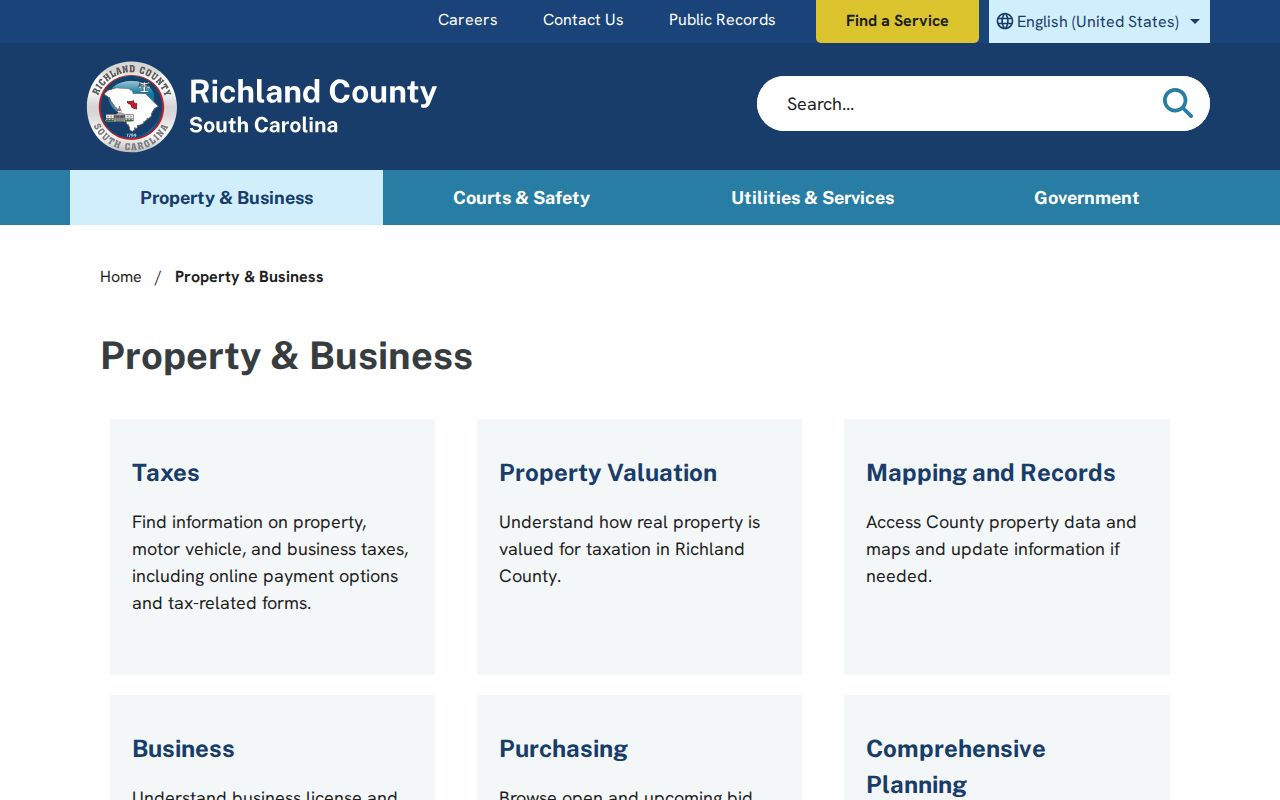
That entry point frames the property roll as an ownership and parcel source, not a complete list of people at an address.
Note: A record may show an online opt-out, which is a display limit rather than proof no county record exists.
Richland County Map Record Layers
Richland GIS adds the geography that a parcel card cannot show by itself. The Dataviewer supports address or parcel searching and layers for parcels, address labels, subdivisions, zoning, tax districts, municipalities, ZIP codes, voting precincts, voting locations, and council districts. That combination helps determine whether an address is inside a city boundary, which office should receive a request, and whether a postal label crosses a jurisdiction. It still does not establish who is in a household.
The county guide’s local input tip is to enter an address such as “1000 Main” without a street type. For a parcel number, choose Parcel and use the 12345-67-89 pattern. The property-search application also supplies map, imagery, Street View, and tabular property context.
See the Richland GIS property-search application before relying on a parcel display.
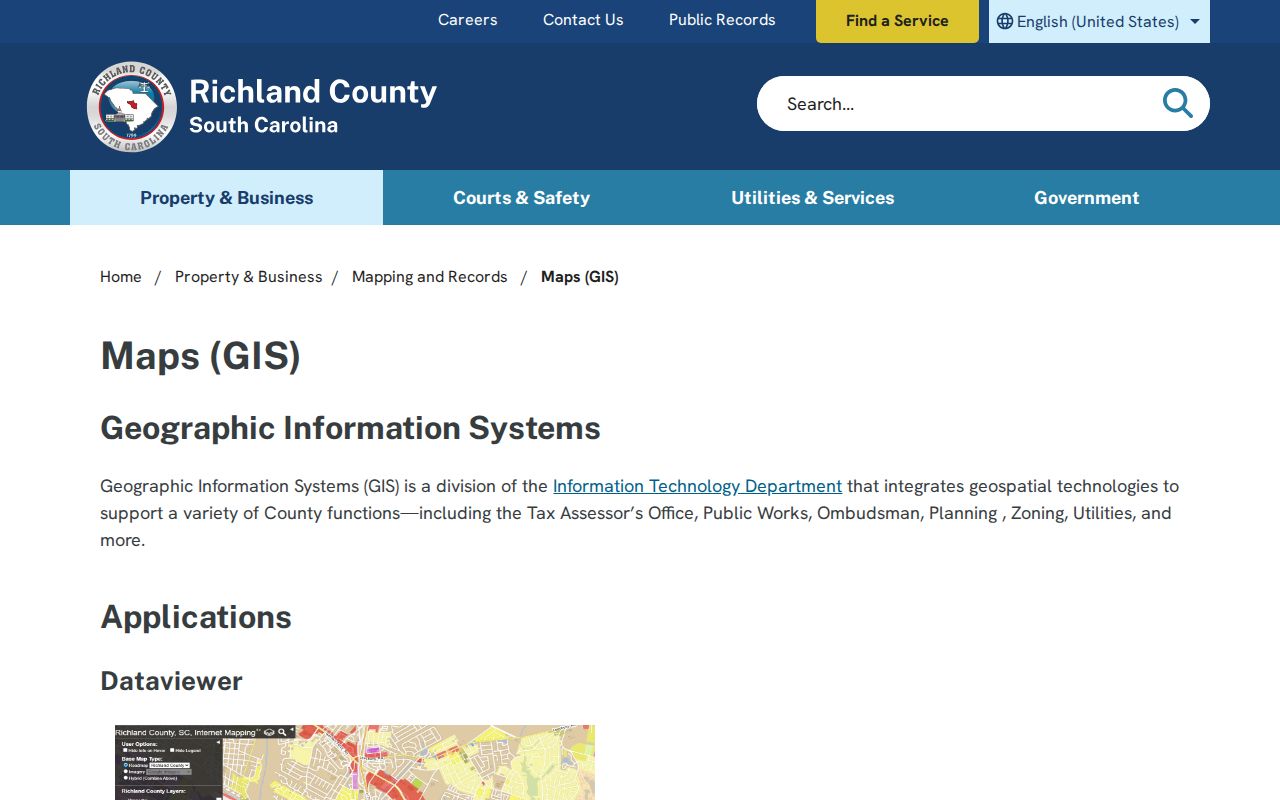
Its map and tabular views are useful for orienting a record trail, while the custodian’s underlying records remain the source for verification.
Richland County Deed Index Trail
The Register of Deeds records deeds, mortgages, liens, plats, satisfactions, and tax liens. Its online Subscription Data Services offers day, week, month, and year access. The ROD guide documents searches by instrument number or book and page, name, file date, property address, and legal description. Because a recorded instrument does not always include an address or tax map number, a name, date window, book/page, or legal description can be more reliable than an address-only query.
Coverage has separate boundaries. The searchable index begins January 10, 1984, online images begin February 19, 1998, and tax-lien search begins in 2000. Before the relevant online boundary, use the Room 101 public viewer, microfilm, and the grantor/grantee, mortgagor/mortgagee, lien, plat, or UCC books. The public counter remains a real access channel when a subscription result lacks an image.
The ROD page explains the office and subscription route.
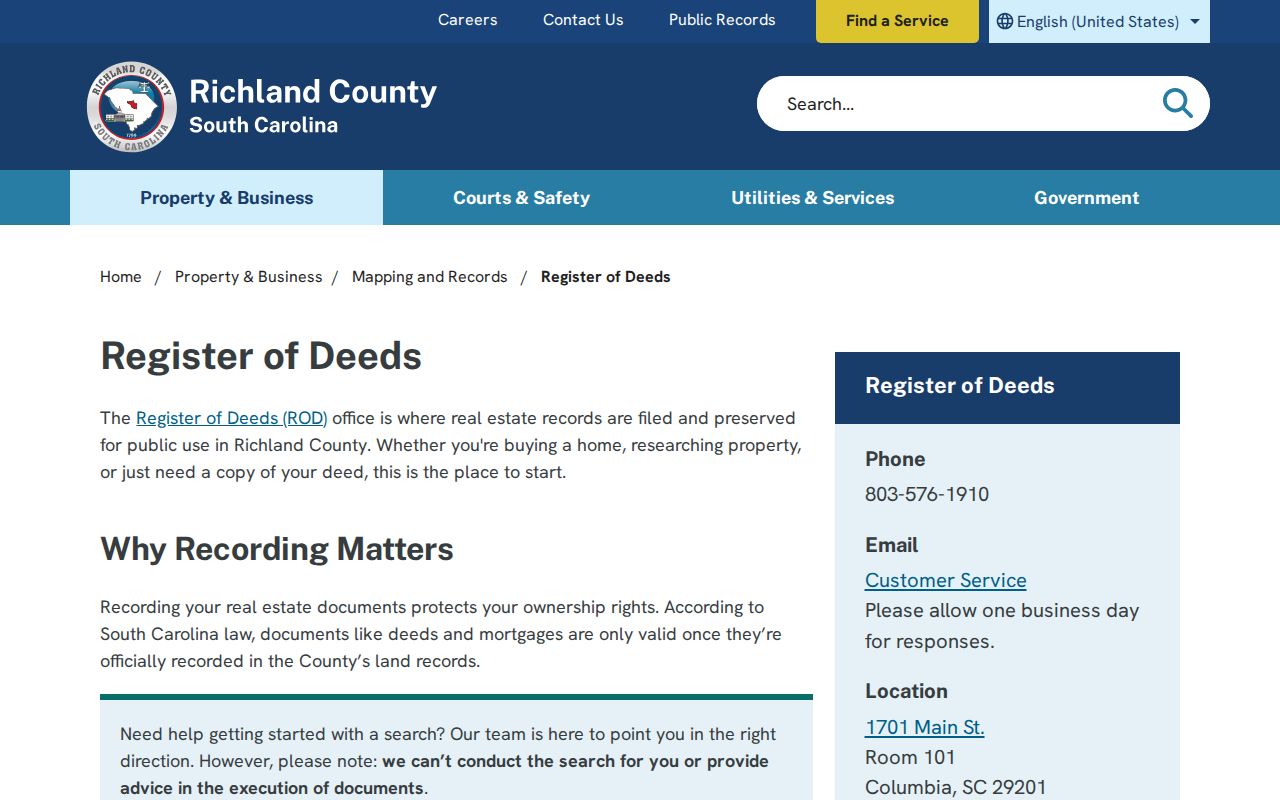
The ROD screen is a doorway to land records, not a promise that every document is online or that a party remains at the property.
Current Richland County Resident Sources
Current directory-like sources answer different questions. The property roll identifies an owner of record and parcel facts. Court and probate indexes show a case or estate lead. A voter’s own authenticated portal confirms registration information, but it is not a general name-only list. The public registration-record route belongs with the Board and state process, subject to statutory custody and protected-address limits. A current result should be read for the purpose it was created, then corroborated with a second record.
| Richland County source | What it can establish | Keeper | Access route |
|---|---|---|---|
| Property Record Card | Owner of record, TMS, situs, sales history | Assessor | Free county-linked portal |
| Recorded instruments | Parties, document type, recorded date, book/page | Register of Deeds | Subscription or counter |
| Trial Court Public Index | Party role, case number, action and date lead | Judicial Branch and Clerk | Public index and file/copy route |
| Estate Inquiry | Basic estate index for filings after 1983 | Probate Court | Online lead, counter for earlier files |
| Historical directory collections | Date-specific address and household evidence | Walker Center and UofSC | Digital and in-library channels |
For one named person, use the narrower record and verification sequence on the Richland County resident lookup page. For a current street or nearby parcel, start with the location-based property and GIS routes instead of a broad name search.
Richland County Voter Record Boundaries
South Carolina’s MyscVOTES path is designed for an individual to view personal registration information. It requires county, first name, last name, date of birth, and the last four digits of the Social Security number as printed on the registration card. It is not a public street-by-street household tool. Under S.C. Code § 7-5-410, official registration records are open for inspection by a citizen at the county board office or Clerk of Common Pleas, while address-confidentiality and other protections still apply.
The state’s voter-list process has its own eligibility and criteria. The published selectors may include county, voting district, age, sex, race, household, participation, and registration date, but do not list street/address as a selector. Participation reports whether a person participated in an election, not a ballot choice.
The South Carolina Election Commission provides the official entry point.
The sign-in requirements make clear why the voter tool cannot stand in for a public residents directory.
Richland County Record Source Comparisons
Official Richland County records are purpose-built sources with a known custodian, access rule, and record date. Commercial people-finder services may compile public and nonpublic inputs, but records can be stale, omit opt-outs, conflate similar names, or hide their source date behind a fee. A useful resident-directory lead should be verified at the office that created or holds the record.
| Official Richland County route | Commercial people-finder category | Best practice |
|---|---|---|
| Identifies a named custodian, record type, and access channel. | May combine inputs of uncertain age and origin. | Start with the actual record holder. |
| Shows a defined field set and source date where published. | Can merge people with similar names or retain old entries. | Compare a persistent identifier or dated record. |
| Offers counter, copy, correction, or records-request procedures. | Does not replace the custodian’s copy or correction route. | Ask the appropriate office about a specific record. |
For estate, family-history, reconnection, civic, or scam-verification research, the official trail also makes it clearer when a result is restricted, opted out, sealed, or simply outside online coverage.
Richland County Record Terms
Records with similar-looking address fields can answer very different questions. These local terms help preserve the distinctions while a result moves from a map to a deed, court file, or historical shelf.
- Roll
- A list maintained for a particular administrative purpose, such as tax assessment or registration, not a universal household list.
- Index
- A finding tool that points to a record, often by party, date, case, or book/page rather than supplying every underlying document.
- Parcel or TMS
- The tax-map identifier for a mapped property. It is a durable bridge into property and deed research.
- Criss-cross directory
- An address-oriented directory arrangement that can lead from a street to a dated household entry.
Using the right term keeps a Richland County residents directory search from overstating what a single screen can prove.
Richland County Marriage Record Leads
Probate Court holds Richland marriage licenses and estate matters. The county marriage certified-copy form searches licenses applied for in Richland County and requires both Party A and Party B first and last names exactly as on the license. Names may be entered in either order. Pre-1993 records may not show a marriage date. A matching county license can enter the copy-order path, but a license from another county belongs with the state Department of Public Health or its proper local custodian.
South Carolina vital records remain controlled by record-specific law. DPH holds births from 1915, marriage certificates for July 1950 through December 2023, and divorce reports for July 1962 through December 2023, subject to eligibility. A certificate request is not a name search. Estate Inquiry covers basic estate indexing after 1983; earlier estate research returns to Probate Court. These distinct channels are useful for an heir or family-history trail when handled by the proper office.
Use the Richland marriage copy search for the local license route.
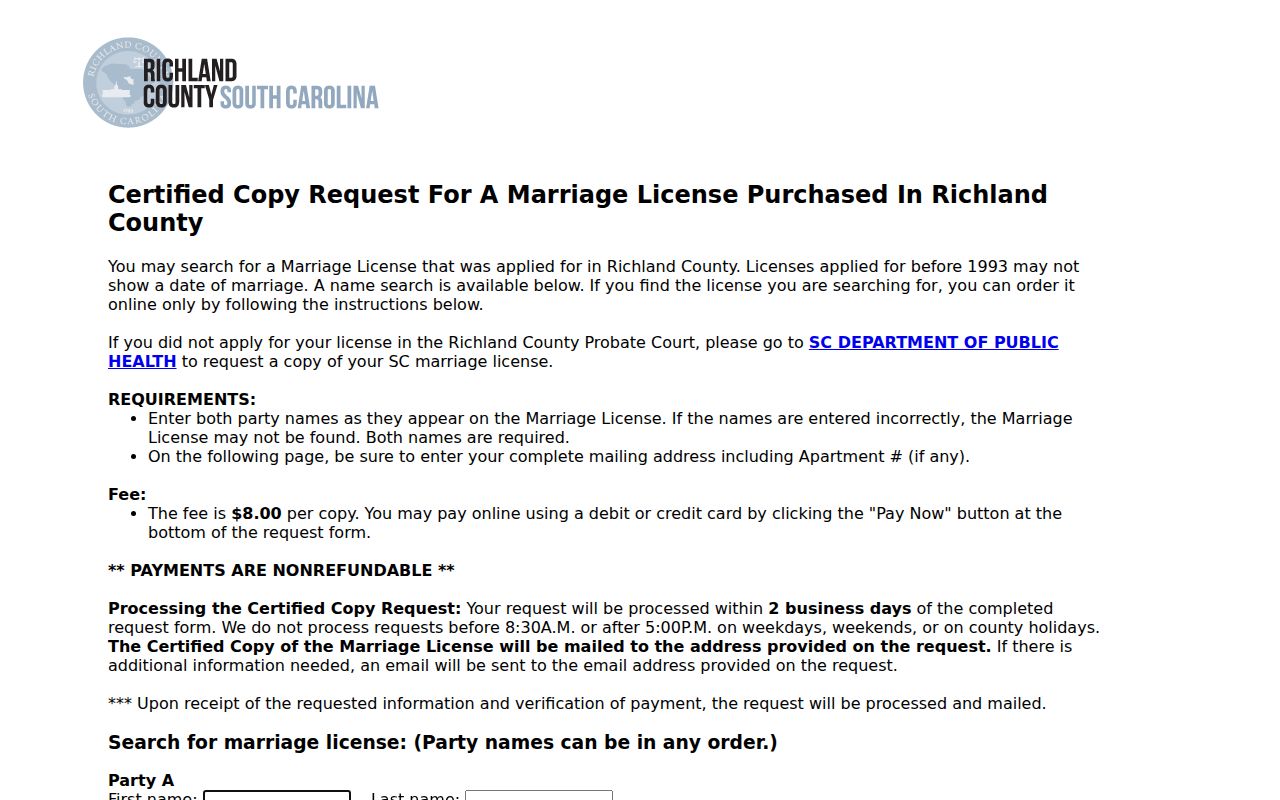
The party-name fields and copy process show the difference between a county event record and a general current-person lookup.
Richland County Record Copy Costs
When a land record needs a copy, the ROD fee page gives a concrete counter and mail fallback. It lists $0.25 per copier printout, $0.51 per instrument or microfilm page, $0.78 per plat page, and $10 to certify a true copy. A mailed copy request is $15 including certification and asks for a self-addressed stamped envelope. The ROD lists these as copy and recording information, not as a guarantee that staff will research an unspecified property history.
A good request names the book and page, instrument number, parties, legal description, or date range. That saves the office from having to infer which document is wanted. The ROD states that staff may direct users but cannot conduct a search or give document-execution advice.
The published ROD recording-fee page lists current categories and copy charges.
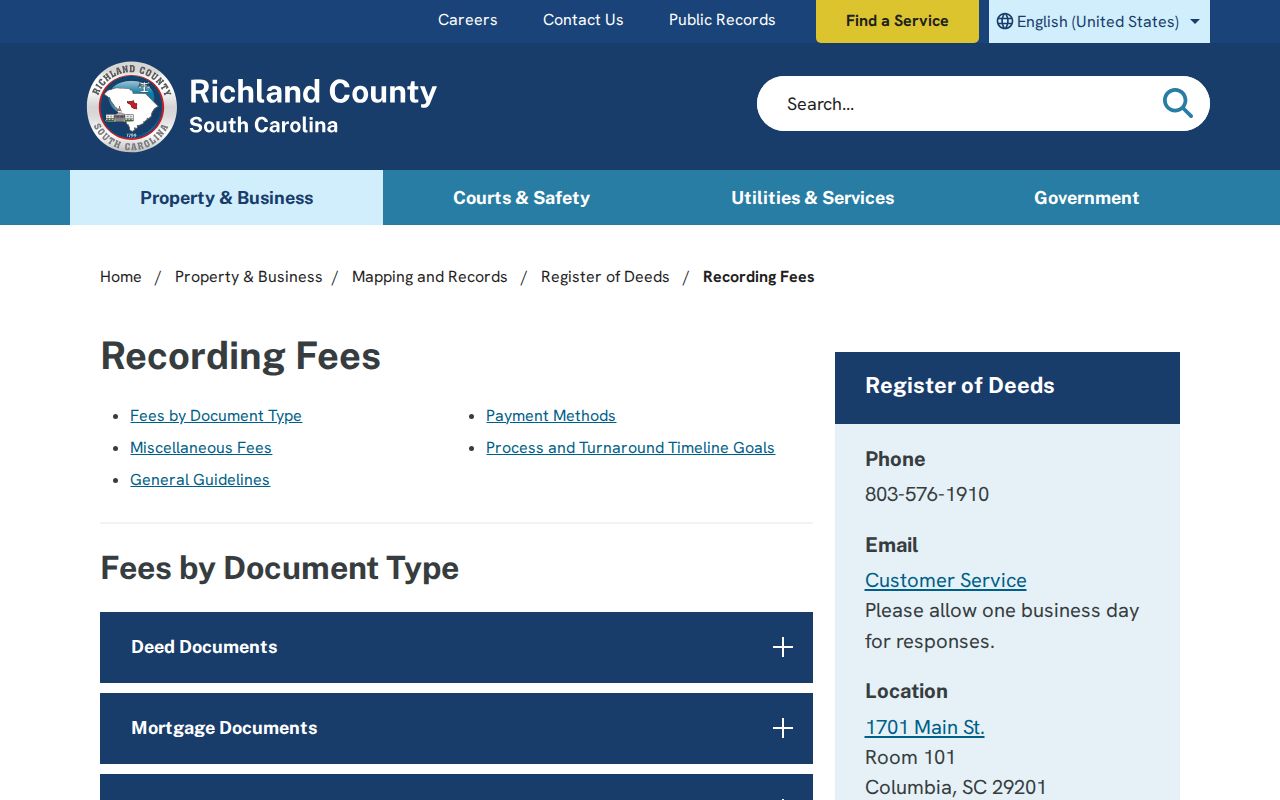
The fee screen supports planning for a specific document request after a book, page, or instrument has been identified.
Richland County Public Records Route
The South Carolina Freedom of Information Act, S.C. Code Ann. §§ 30-4-10 through -165, is a route for non-exempt county administrative records, not a substitute for court confidentiality, vital-record eligibility, or protected-address rules. Section 30-4-30 governs inspection, determination, production, and fees; § 30-4-40 identifies exemptions. Richland County accepts written requests through its public-records submission and Ombudsman pathway.
For records less than two years old, the standard written determination timing is ten business days; for older records it is twenty business days. If records are available, production or inspection is generally due within thirty calendar days after the determination, or thirty-five for older records, subject to a permitted deposit. The county may seek up to 25 percent of the estimated actual search, retrieval, copy, and redaction cost. Describe records, dates, and the desired format rather than sending a broad question.
Richland County’s Public Records page is the official written-request entry.
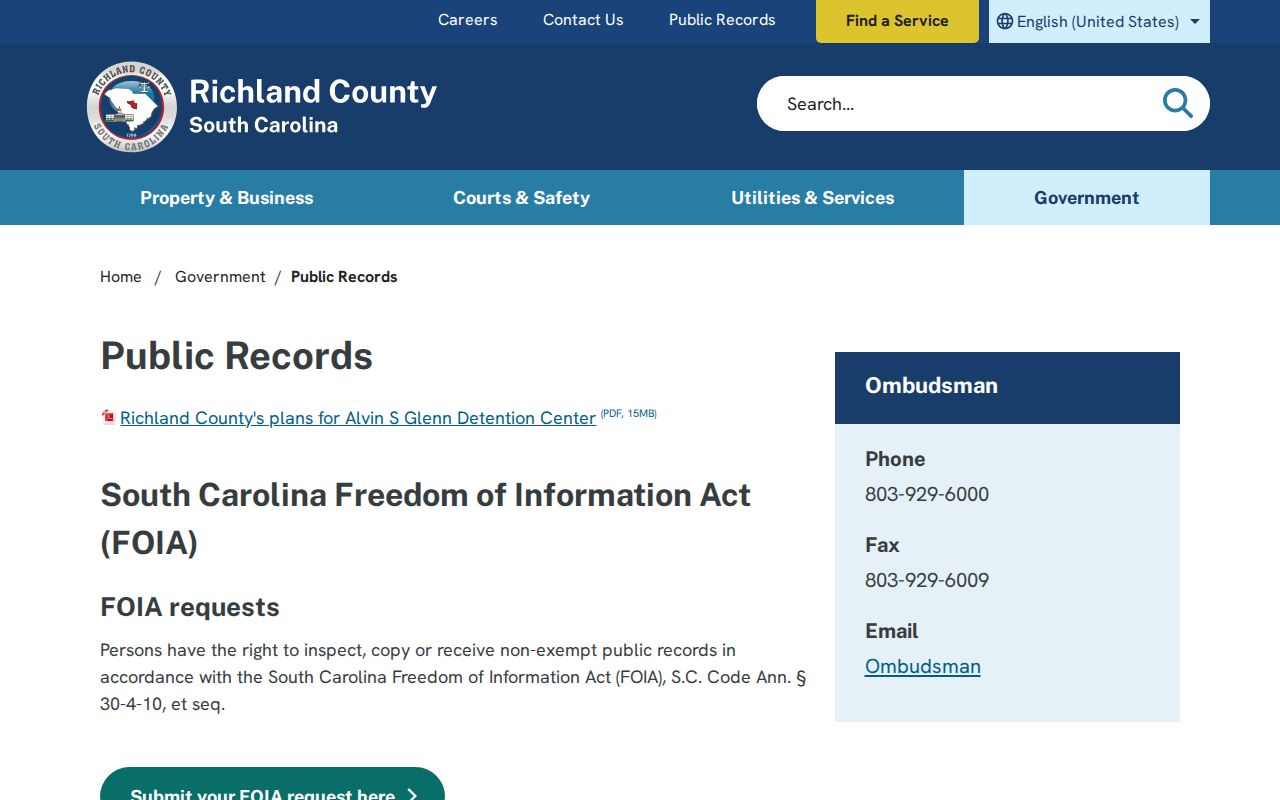
The request screen is most useful after the record holder and a focused time span have been identified.
Historical Richland County Resident Shelves
Past Richland County residents are best traced through time-stamped collections, not modern screens. The University of South Carolina’s digital Columbia directory collection has selected issues from 1859 through 1927. Richland Library holds Hill’s Columbia volumes from 1929 through 1979 with documented gaps, plus selected Polk volumes from 1985 through 1997. Digitized 1942 and 1954 telephone materials provide later snapshots. The publisher, edition year, initials, street entry, and abbreviation key all matter.
Walker Local and Family History Center at Richland Library Main supplies the local shelf, maps, yearbooks, newspapers, obituary resources, FamilySearch Affiliate access, and research help. It accepts walk-ins, appointments, and remote obituary requests. The detailed collection years and reading method belong in the Richland County Directory Book, while an old address can be compared with a property and deed trail.
Richland County Library Records Evidence
Walker Center adds household context that land records do not contain. Its local history holdings include city and telephone directories, yearbooks, obituary and newspaper sources, maps, oral histories, and digital collections. A directory entry may show a name, residence marker, address, occupation wording, and telephone number for that edition. It is publisher evidence for one period, not a government certification or proof of every person at the address.
Search surname variants and initials, then preserve the exact issue date. When a name disappears, test a library holding gap, a changed initial, a street change, a map difference, an obituary lead, or a probate record before inferring a move or death.
Richland Library’s Walker Local and Family History Center describes its research services.
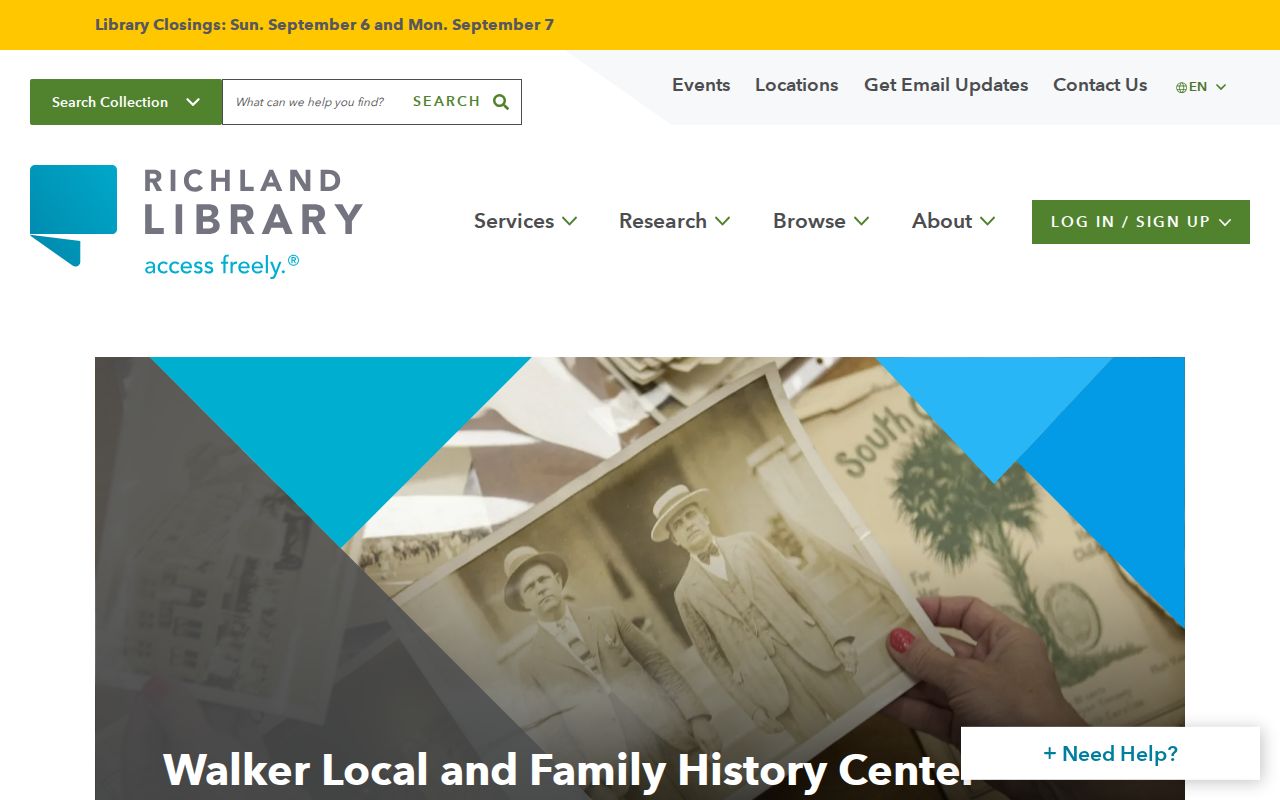
The local-history desk provides a documented in-person and remote route when a web index stops short of an older household.
Richland County Records Gap
Richland County’s historical trail has a real break. The South Carolina Archives says the courthouse and most records were destroyed during the February 1865 fire in Columbia, while most equity and probate records had been removed. A missing pre-1865 courthouse item can therefore be a structural loss, not a failed search. The useful response is to change record group and era.
The Archives documents recovery paths including conveyance books from 1865 to 1951, a general RMC index from 1872 to 1908, Auditor and Treasurer tax duplicates, historic voter-registration books, court series, and surviving probate or equity materials. Pair those with directories, plats, maps, and the Walker collections. A gap in one shelf is itself important information.
Richland County Record Privacy Choices
Public availability has boundaries. The Address Confidentiality Program gives qualified South Carolina participants a substitute mailing address for future state and local public documents. Court seals and expungements, vital-record eligibility, protected voter information, DMV restrictions, and private utility data have their own rules. The property card also has a record-by-record online opt-out route. A field marked opted out does not erase the legal ownership record or prove a person is absent from the county.
Personal use. Use Richland County records for lawful family history, estate, reconnection, civic, or scam-verification research, never to watch, threaten, or harass another person.
Note: When a record is restricted, the correct next step is its custodian’s stated procedure, not an attempt to assemble protected details elsewhere.